Brisbane CCTV ExpertsSecurity, antenna, TV + data

Custom commercial design

Commercial CCTV System Planning Brisbane

Commercial CCTV moves beyond preset camera counts because operations, access, cable distances, review responsibilities and incident risks differ from site to site.

Isometric infographic of a secured home with CCTV cameras, intercom, alarm, recorder, network equipment, and phone viewing

Protect what matters

Clean install path

Phone access and playback tested

What this helps you solve

Clear answer before you enquire.

A commercial CCTV design should map operational and risk zones, camera purposes, recorder and storage requirements, network paths, remote users and handover before the final camera count and quote are confirmed.

Fit

Camera count only works when it matches the property.

Check

Cable access, recorder storage, app setup, and night footage.

Next

Send the coverage areas if the camera count feels like a guess.

Who this helps

Use camera count as a starting point, then check it against the property.

Four, six, eight, and custom systems can all be right or wrong. The best package depends on the areas to cover, storage needs, cabling, and app access.

Retail
Warehouses
Offices
Workshops
Body corporate
Multi-site

What we check

  • Areas to cover
  • Cable paths
  • Recorder location
  • Storage needs
  • Phone viewing
  • Upgrade path

Before choosing a package

Camera count only works when the layout makes sense.

Four, six, eight, and custom systems can all be right or wrong. The layout, cable access, recording needs, and app setup decide the real fit.

Camera positions

The quote should be based on the actual need: entries, vehicles, tools, stock, staff areas, side access, business areas, signal issues, or old-system gaps.

Cable and network path

A clean install depends on where cable can run, where the recorder sits, and whether the network can support remote viewing.

Recorder and storage

The recorder setup should match camera count, footage quality, storage expectations, and how often footage needs to be reviewed.

Handover

The system should be tested, the app should be set up where needed, and the basic playback process should be clear.

Package detail

Check the camera count against the actual property.

Use the package as a starting point, then let the property layout prove whether the camera count is actually right.

When people usually need this

Commercial sites whose zones, users, cable distances or review needs do not fit a preset camera count.
Map operational and risk zones first, then assign overview or identification views and the recorder/network path each requires.
You want the camera count checked against blind spots, identification distance, night lighting and cable access.
You need recorder channels, storage, networking, phone viewing and handover considered before a quote.

What we handle

Coverage-zone check

The package is compared against entries, driveway, side access, rear areas, business zones, and blind spots.

Recorder fit

Camera count affects storage, playback, app setup, and how easy footage is to find later.

Cable path check

The package only works if the property can support the camera positions cleanly.

Insufficiency check

A preset count fails when it compromises an important view, recorder expansion, controlled user access or multi-building design.

Decision path

Choose the path that matches the job.

Use this count

Best for: Commercial sites whose zones, users, cable distances or review needs do not fit a preset camera count.

Watch: A preset count fails when it compromises an important view, recorder expansion, controlled user access or multi-building design.

Move up/down

Best for: Properties where one or two extra views change the usefulness of the system.

Watch: More cameras are not better if placement is weak.

Go custom

Best for: Commercial, wide, awkward, or multi-zone properties.

Watch: Needs better planning before quoting.

Property types we plan for

Warehouses

Loading, stock, roller doors, vehicles, yards, offices and perimeter zones.

Retail and hospitality

Customer entry, counter, storage, back-of-house, staff and closing-time access.

Offices and clinics

Reception, visitor entry, corridors, equipment, staff access and parking.

Mixed-use sites

Separate buildings, users and risk zones requiring one coordinated design.

Common mistakes

  • Choosing a camera count before listing the areas to cover.
  • Ignoring storage and playback as camera count increases.
  • Treating an awkward commercial site like a package job.
  • Forgetting phone viewing and handover.

Send this for a sharper quote

  • List the areas each camera should cover.
  • Tell us whether the property is home, business, or commercial.
  • Send existing camera/recorder photos if upgrading.
  • Mention if phone viewing, night footage, or storage matters most.

Package fit check

Make the camera count prove itself.

A package is only useful if it matches the areas to cover, cable path, recorder needs, and handover expectations.

Where this can work

This camera count can be a useful starting point when the property fits the number of views without forcing wasted angles.

What can make it wrong

Long cable runs, awkward roof access, wide outdoor areas, poor lighting, or multiple business zones can push the job toward a different layout.

Recorder and app fit

More cameras can mean more storage, better playback habits, and clearer handover. The recorder and app setup need to match how the footage will be used.

Quote detail to send

List the zones you expect each camera to cover. If the list feels forced, send the property details and we will work from the layout instead.

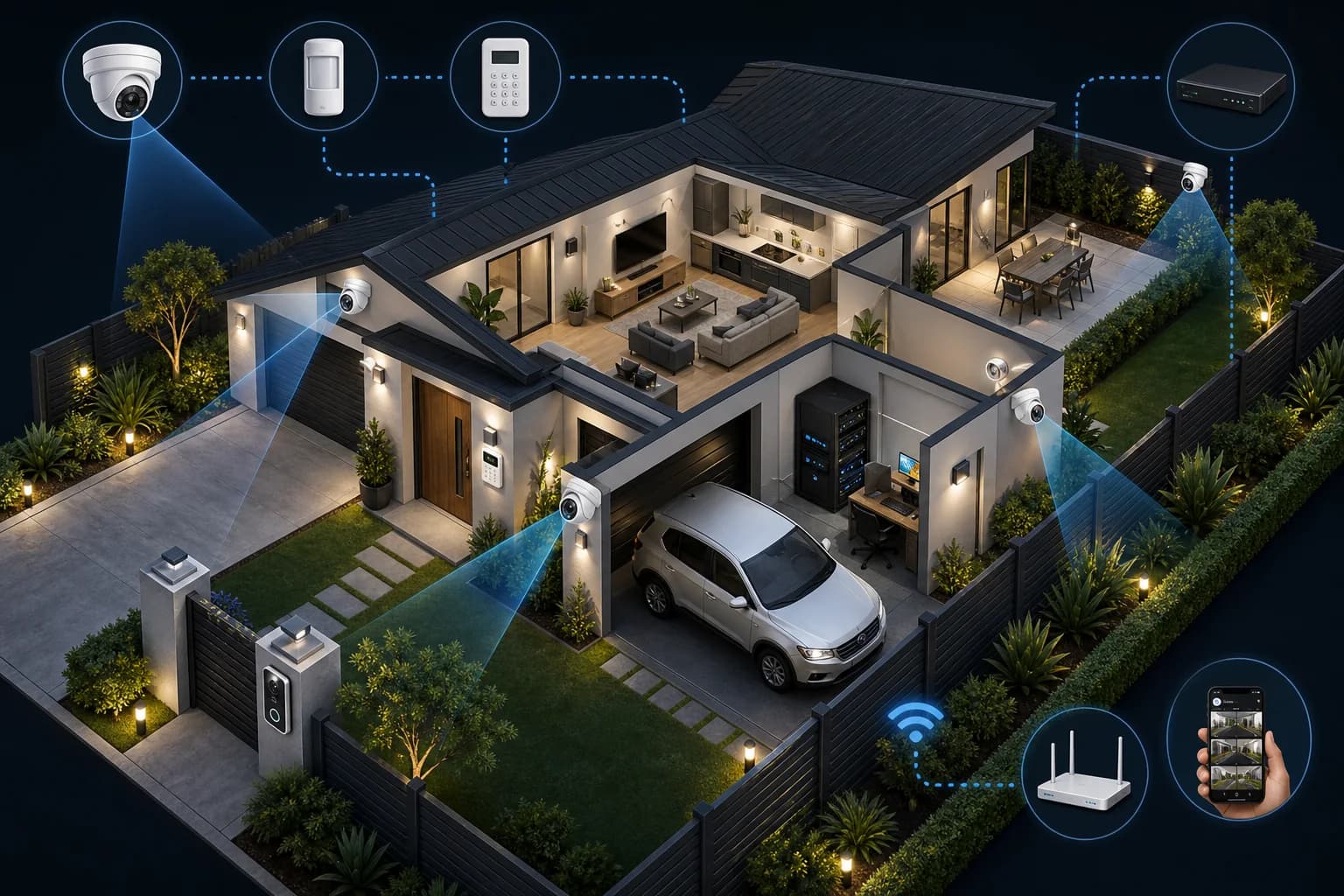
Who needs custom commercial planning

Warehouses, workshops, offices, retail, clinics and mixed-use sites often need different external, customer, staff, stock, loading and after-hours zones considered together.

Map the operational zones

Define entry and exit points, reception or counter, staff-only areas, stock, equipment, loading, vehicle, yard and perimeter views. Each proposed camera should solve a stated incident or review need.

Placement, lighting and cabling

Long distances, mounting access, night lighting, glare, network cabinets, building separation and cable routes can change the camera type and system architecture.

Recorder, retention questions and users

Planning should cover channel capacity, footage volume, expected review window, owner or manager access, user permissions and how footage will be searched and exported.

When preset counts fail

A 4, 6 or 8-camera starting point is insufficient when important zones compete for views, cable paths cross large sites, multiple buildings are involved or several users need controlled access.

Prepare for a commercial quote

Send a site plan or photos, operating hours, priority incident zones, current equipment, network or recorder locations, required users and any access constraints. Final design and quote depend on the site.

Coverage planning

Shop coverage plan

Retail CCTV needs usable views of customer flow, transactions, stock, and after-hours movement.

Zone 01

Entry

Who comes in, when they entered, and the clearest face angle.

Zone 02

Counter

Payment area, staff interaction, and dispute visibility.

Zone 03

Aisles

Customer movement, blind spots, and high-value product areas.

Zone 04

Stock

Back room, staff-only areas, deliveries, and storage access.

Camera angle
Cable path
Recorder/app handover

Quick answers

Questions before you choose

Can commercial CCTV be quoted without a site check?

A preliminary direction may be possible from a plan, photos and clear requirements, but complex sites often need more detail before the final design and quote.

How many cameras does a commercial site need?

Count the distinct views needed for entries, customers, staff, stock, loading, vehicles, yards and perimeter. Camera count follows those zones and the detail required in each view.

Who should have remote CCTV access?

Access should be limited to the owners, managers or authorised users who need it. Recorder and app permissions should be planned and handed over deliberately.

How is commercial CCTV storage planned?

Storage depends on camera count, resolution, recording settings, activity and the review period the business needs to discuss. No fixed retention period is assumed.

Can access control and repairs be considered with the CCTV design?

Yes. Existing-system faults, doors, user access and adjacent security needs can affect the wider plan, but each service still needs its own scope.

After you enquire

What happens next.

We use the job details to work out the most useful next step before anyone guesses at camera count or equipment.

01

Confirm what matters

Tell us whether the package is for home safety, cars, tools, stock, counters, loading areas, signal, screens, or a wider site layout.

02

Check if the package fits

We compare camera count against the property, cable access, recorder needs, app setup, and any upgrade constraints.

03

Move from package to plan

If the package is right, it becomes the starting point. If not, we point the quote toward the layout that makes more sense.

Specialist, not handyman CCTV

  • Property type, suburb, and what you need protected, fixed, connected, or set up.
  • Whether the job needs a new install, repair, upgrade, or app setup.
  • Recorder, storage, phone app, and handover needs.
  • Cheap, DIY, and rushed camera setups are not the benchmark.
Get a Quote
CallGet a Quote